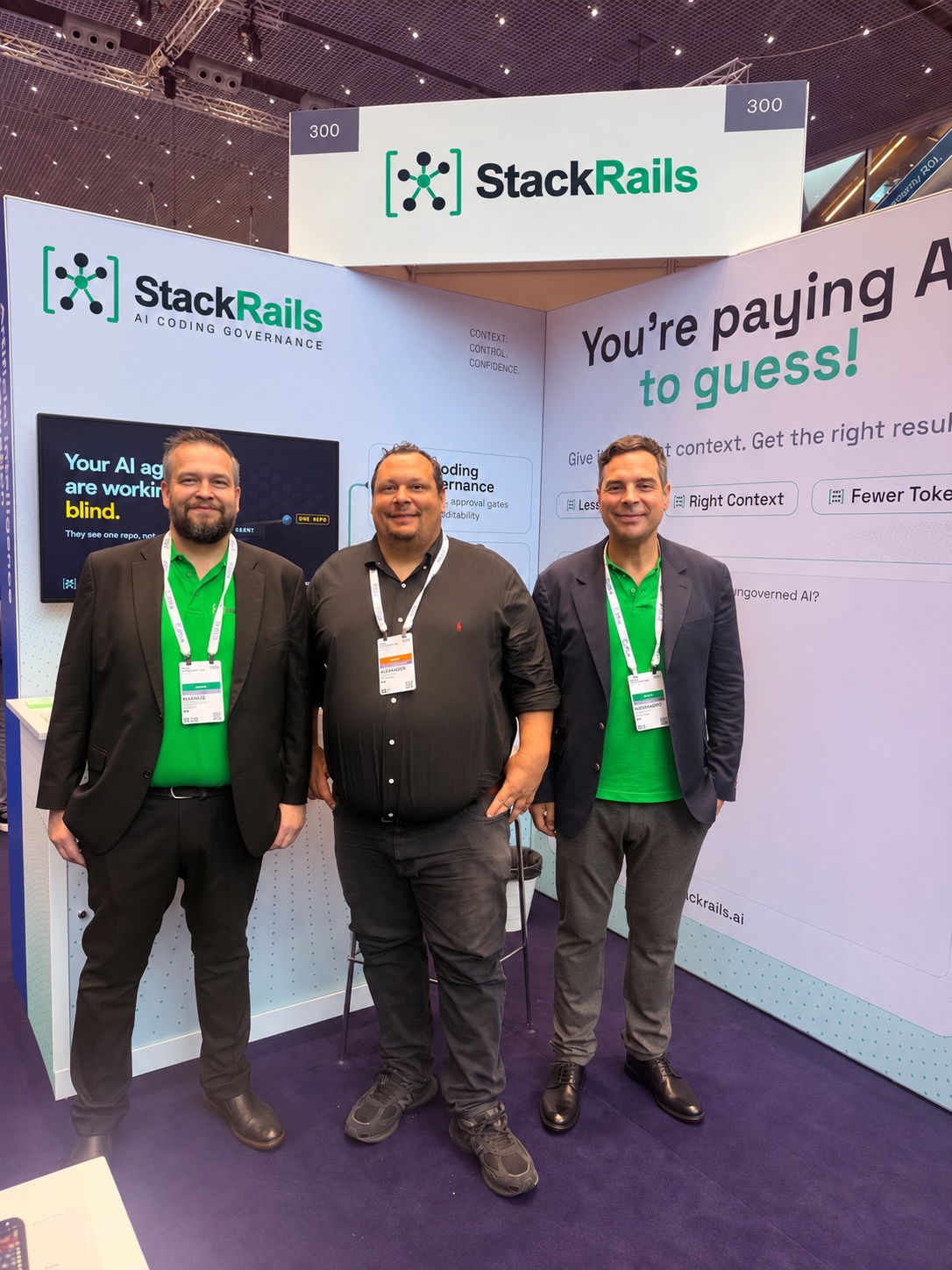
"You are not going to fit a whole complex codebase of over one million lines of code into the context window of an LLM-based coding assistant. Only few percent will fit. We need to ensure that this one percent is precisely the right context the coding agent needs to deliver the best code possible," said Alexander Wheeler, co-founder of StackRails.
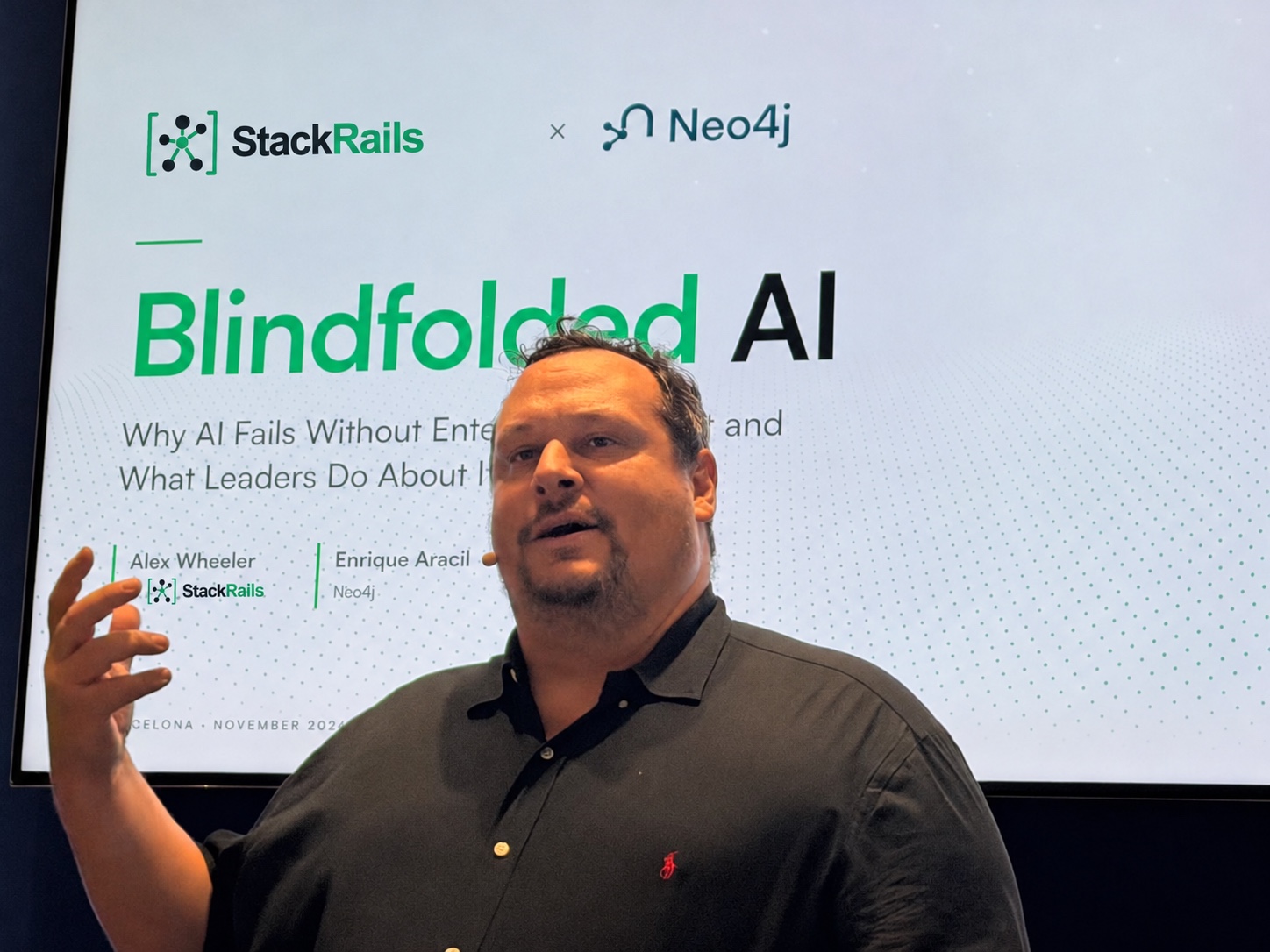
At the Gartner IT Symposium/Xpo in Barcelona in November 2026, he explained the challenges and problems of AI-generated code in simple terms.
Blindfolded AI breaks things. What it costs you when it does
Without the right context, the consequences add up fast. An e-commerce company can see its processes freeze because a front-end change broke checkout. An online service can go down because someone deleted a function with a chain of hidden dependencies. Teams can burn time and money building duplicate features, or even mutually exclusive ones.
AI generates code rapidly, but misses the business context, coding standards, duplicated logic, and security risks.
"That's why StackRails maps all the dependencies, so the agent can make fitting modifications and understand what is going to happen when it changes an object in one class, and there are other classes depending on that class or dependencies across loosely coupled microsevices communicating over an eventbus. Or even deeper chains of connections," said Alex Wheeler. His session was titled "Blindfolded AI - Why AI Fails Without Enterprise Context and What Leaders Do About It."
AI code generation and its impact on business workflows was one of the main themes of the event. Talks covered best practices as well as the pitfalls and obstacles companies can run into.
"Our focus is governance. Nearly all discussions around modern AI are about governance, how we embrace AI but in a safe way. StackRails is what enables AI code governance at enterprise scale," commented Alex Wheeler.
Fast code isn't free
AI writes code fast, and speed only helps when the code is right.
"AI is outputting more and more code, at three to ten times the speed, and we need to make sure that the code is in line with the system architecture of the enterprise. Does it fit the way the company is doing logging, authentication or authorization, or dozens of other policies and standards enterprises have?" he said.
Modern coding tools can handle up to one million tokens of context, though most work with around 200,000. That is still a small window onto a large codebase.
"The right context is the game changer. If you give the LLM the right context to work with, it will generate better code immediately, without frustrating and costly loops of reworking," said Alex Wheeler. "Without the context, the LLM-generated pieces work, but they don't follow company policies and standards. They may include hallucinated components or libraries your organization doesn't allow. Engineers spend more hours and use more tokens to fix the code, yet the next output is also flawed. The cycle repeats and money is lost," he said.
Agents also write more code than architects can review. "Some pieces of that code pollute the codebase with dependencies and bugs that must be fixed later," said Alex Wheeler. "This creates another cost to manage in the long term. Unknowingly, the company amasses the shadow code that is uncontrolled, unsupervised and undocumented, ready to break and paralyze the workflows any moment."
For companies, this is where the AI race is won or lost. Teams that give their agents the right context ship faster, spend less on rework and tokens, and move ahead of competitors still stuck in fix-and-repeat loops. They are also in a better position to scale AI adoption safely instead of just quickly.
Mapping the codebase
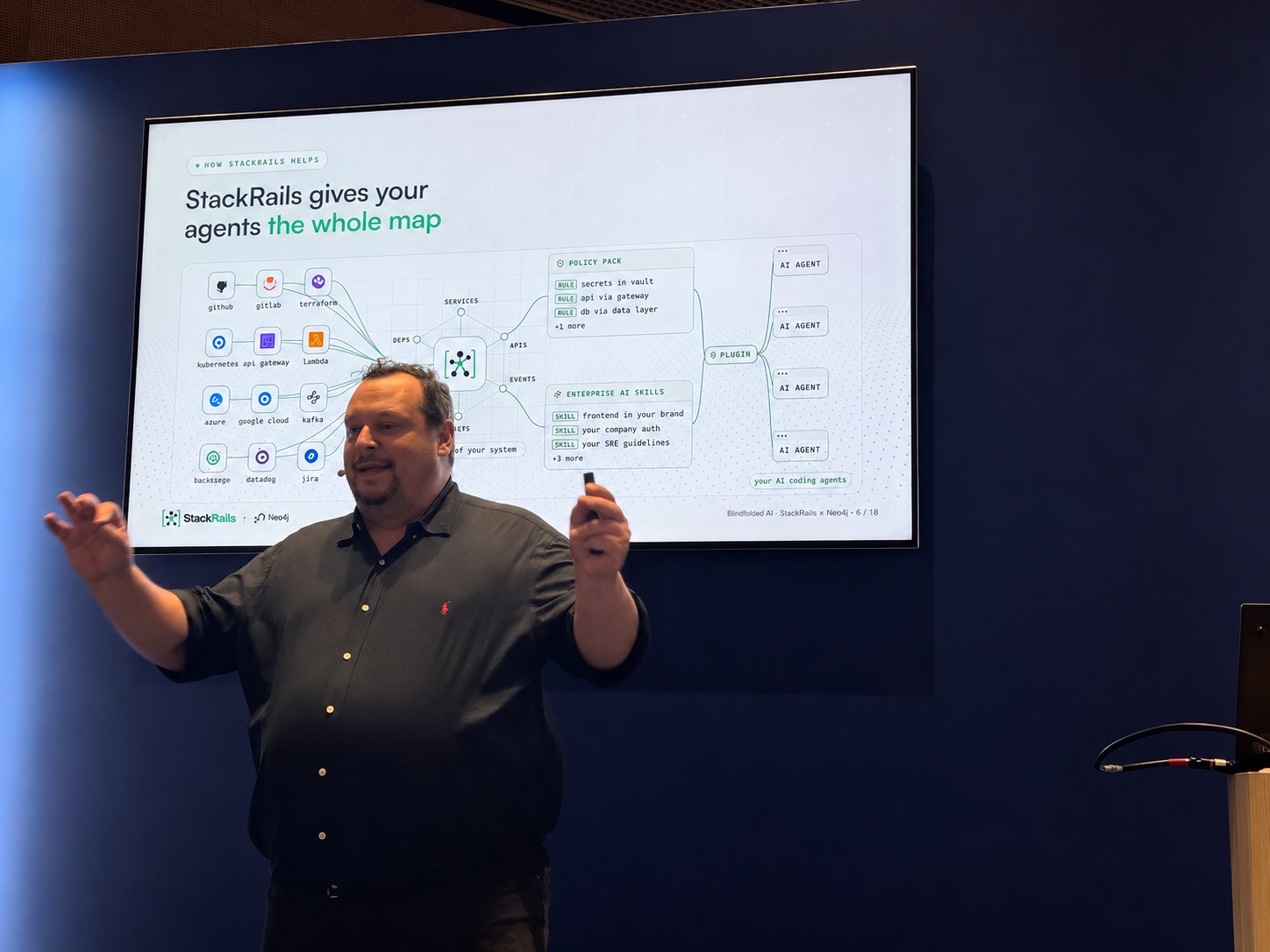
StackRails maps how code and systems depend on each other across a business, using its own graph technology. It gives AI agents that architectural context and the company's policies before they write, then checks the result against the same policies, so an AI change fits the architecture and doesn't break anything downstream.
"The graph is crucial here because it allows the tool to truly understand the context of a change. It follows the knowledge gathered from a StackRails-prepared map of dependencies within a complex codebase. Instead of looking only at the nearby code, the agent can see a larger picture with a multi-hop reasoning," said Alex Wheeler.
"If we are changing one thing, we know straight away how it impacts the whole system, without the need to search the code. We know all the necessary context from our RAG-Graph: what dependencies that particular piece of code has or what other pieces of code have dependencies on the code we are actually changing," he added.
The graph connects services, data, APIs, events, owners and code dependencies. Architects get one consolidated view of the system, its potential risks and its areas for improvement.
Augmenting the AI-powered tools
The StackRails plugin connects to popular AI-powered coding tools like GitHub Copilot, Codex, Cursor and Claude Code. Engineers get the context they need to ship the next piece of code, right where they already work.
"It is very different from the way coding has worked until recently, when knowledge was scattered across separate documentation and held in the heads of key people in the company," said Alex Wheeler. "With StackRails you have live, current and up-to-date documentation of the code with AI agents understanding it," he said.
Typical documentation lives on wikis and Confluence pages that quickly go stale. "After some time you are not even sure whether it is correct or not," he said.
StackRails replaces that with live documentation anyone can use. An engineer who joins on day one can start digging in, get going and be self-sufficient much sooner. For a company, that means faster onboarding, less dependence on key people, and less time lost waiting for answers.
Security by design
"The security architecture ensures that users have access only to permitted repositories and are receiving permitted API contracts, ownership information and architectural metadata while implementation details remain restricted. The product offers useful information to be used, and warnings if there is a risk of breaking something," said Alex Wheeler. "All output is tested against the policies and rules defined by the company, with the tool notifying the user about pieces of code that don't follow the standards, so the risk is further reduced," he added.
The platform works like a detailed map of the codebase, infrastructure and organization. "Changes are always made by engineers. Access is governed by Attribute-Based Access Control, which manages the tool's permissions in the same way it would those of a new user," said Alex Wheeler. "The solution doesn't just open up the whole codebase to anyone who is looking at it. It still follows architectural policies that have already been defined in GitHub or GitLab, so one does not have access to the entire codebase that has been analyzed," he adds.
StackRails is also a tool that can contribute to increasing security and stability of the codebase. “Ungoverned shadow code can destabilize the whole codebase as a creeping threat ready to hit when nobody expects. StackRails is where the code that doesn’t follow policies and standards is prevented from being shipped. The tool checks all modifications against policy documents, delivering warnings and ensuring agents are compliant to internal norms. This alone is a huge factor contributing to better stability and robustness of the codebase” added Alex Wheeler.
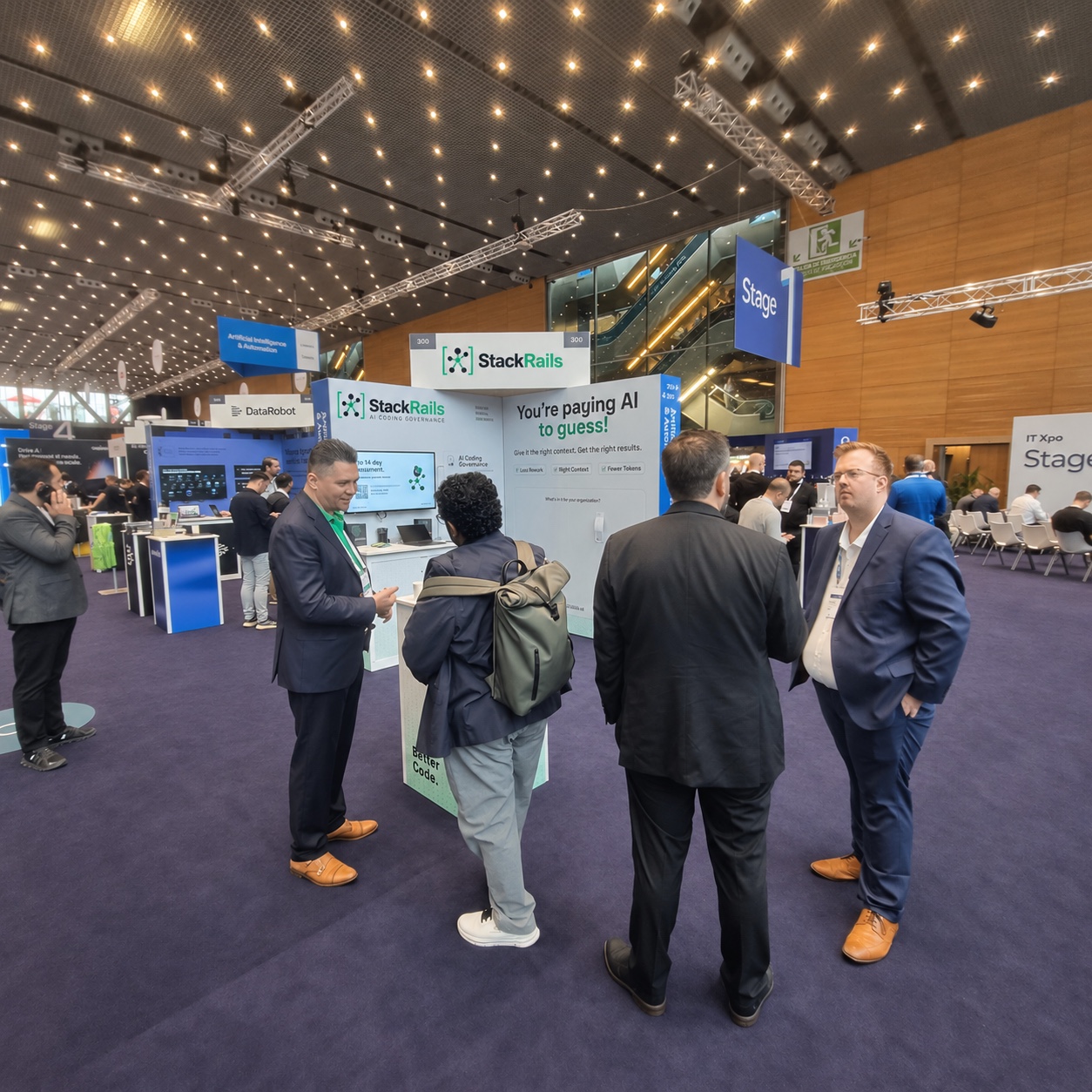
Built to share knowledge. It's in our DNA
"This event was a great opportunity to meet like-minded people and exchange knowledge and best practices. StackRails is a context and knowledge layer, after all, so sharing knowledge is deep in our DNA," concluded Alex Wheeler.